



What are local SEO ranking factors?
For a business that serves a town or a county, the search results that matter are the local ones. If you are not optimising for those, you are invisible to the customers who are closest to you and ready to buy.
Google names the factors that decide local rankings on its own support pages, and there are fewer of them than most people expect.
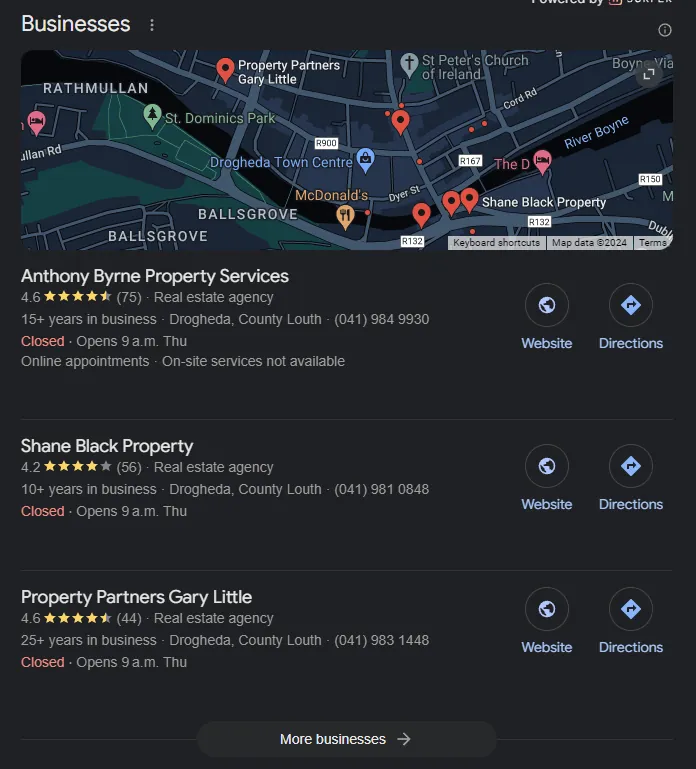
Which local SEO ranking factors does Google care about?
Google’s support page reveals a bit on the magic behind local rankings. The search engine giant has revealed three key local SEO ranking factors that should be at the top of every business owner’s priority list.
Relevance Comes First
Google serves the most relevant result for each query. If someone searches for “steak restaurants in Manchester”, Google will favour listings that say plainly they are a “steak restaurant” over general eateries that happen to have steak on the menu.
Location, Location, Location
Distance is another major factor, especially for smaller local businesses trying to compete with the big guns. With local services, most people want whoever is nearest. So if you’re a plumber based in Bromley, you’ll get preference in Bromley-based searches over a company located 20 miles away.
Build That Local Reputation
Then there’s prominence, how well-known and respected your business is in the local community. This covers things like citations in online directories, mentions and backlinks from authoritative local websites, reviews from happy customers, and a solid website with quality local content. It comes down to proving to Google that you are established and trusted where you are.
What is Local SEO?
Local SEO (Search Engine Optimisation) puts your products and services in front of local customers at the moment they are searching for them. It works differently from traditional SEO, which aims at ranking across a broader geographic area.
What Local SEO Does for a Business
Customers use search engines to find businesses, products and services near them. Local SEO is what gets your business into those “near me” results, and onto the map beside them.

Key Benefits of Local SEO
- Improved Visibility: Local SEO enhances your business’s visibility in local search results, making it easier for potential customers to find you.
- Increased Conversions: By reaching your target audience when they’re actively seeking your products or services, local SEO increases your chances of converting leads into customers.
- Competitive Edge: A strong local SEO strategy can help you outrank competitors in your area, giving you a significant advantage in the local market.
How Local SEO Works
Local SEO means tuning your website, your listings and your citations so search engines can tell your business is relevant to a local search. The main parts of it are these:

On-Page Optimisation
- Consistent NAP (Name, Address, Phone): Ensuring your business’s name, address, and phone number are consistent across your website and all online platforms.
- Location-Based Keywords: Incorporating relevant location-based keywords (e.g. “plumber in London”) into your website’s content.
- Mobile-Friendly Design: Local searches happen on phones, so the site has to work properly on one.
Google My Business
Set up and optimise your Google My Business (GMB) profile. A complete, accurate and engaging GMB listing can help your business appear in Google’s Local Pack, Local Finder, and Google Maps, increasing your visibility to local searchers.
Local Citations
Local citations are mentions of your business’s name, address, and phone number (NAP) on other websites, such as local directories, review sites, and social media platforms. Consistent and accurate citations across the web help reinforce your business’s local presence and improve local search rankings.

Online Reviews
Positive online reviews can significantly impact your local SEO performance. Encouraging satisfied customers to leave reviews on your GMB profile and other review sites can boost your visibility and credibility in local searches.
Local SEO Strategies for Success
To maximise the benefits of local SEO, businesses should implement the following strategies:
- Claim and Optimise Your Google My Business Listing: Ensure your GMB listing is complete, accurate, and engaging, with high-quality photos, updated business hours, and relevant categories.
- Build Local Citations: Identify and list your business on reputable local directories, review sites, and niche-specific platforms relevant to your industry.
- Create Localised Content: Develop content that caters to your local audience, such as blog posts about local events, news, or topics of interest in your area.
- Encourage and Respond to Online Reviews: Actively encourage customers to leave reviews and promptly respond to both positive and negative feedback, demonstrating your commitment to customer service.
- Use Social Media: Engage with your local community, share updates and promotions, and talk to potential customers in your area.
- Acquire Local Backlinks: Pursue opportunities to earn high-quality backlinks from reputable local websites, such as local news outlets, community organisations, or relevant industry blogs.
- Optimise for Voice Search: With the rise of voice assistants and conversational search, optimise your content for long-tail, natural language keywords to improve your visibility in voice searches.
Measuring Local SEO Success
To track the effectiveness of your local SEO efforts, monitor the following key performance indicators (KPIs):
- Local search rankings for relevant keywords
- Website visits and traffic sources from local searches
- Conversion rates from local customers
- Google My Business insights (views, clicks, calls, etc.)
- Online review sentiment and volume
By regularly analysing these metrics, you can identify areas for improvement and refine your local SEO strategy to achieve better results.
Competing With Other Local Businesses
Local SEO is hardest in built-up areas and in popular business categories. To stay ahead, businesses must:
- Differentiate themselves with a strong unique selling proposition (USP)
- Continuously monitor and adapt to changes in search engine algorithms
- Invest in ongoing local SEO efforts and stay up-to-date with industry best practices
The Future of Local SEO
The work you put into local SEO now carries over into voice search and personalised results, both of which are becoming more common.
What This Means for Your Business
Local SEO is not a job you finish. Keep the listings accurate, keep the reviews coming in and keep the content local, and you get found by the people who are near enough to buy.